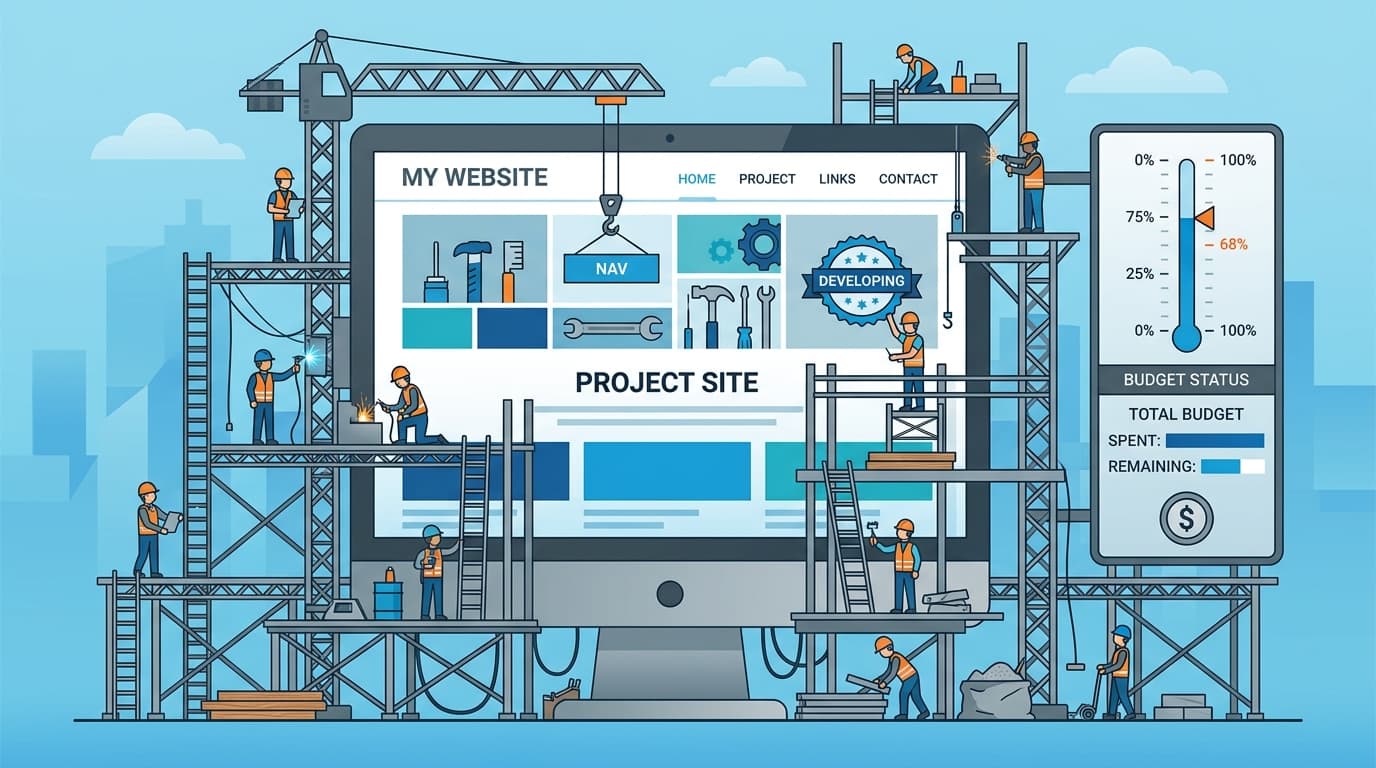

In short - According to a Standish Group study, 66% of digital projects exceed their initial budget or timeline, mainly due to insufficient upfront scoping, a reality that is pushing companies to rethink their development approach by investing more in the product definition phase.
Introduction: code is not the starting point
You have an idea for an application or web platform. The desire to see the first mockups, then the first prototype, is understandable. Yet rushing into development without solid scoping is like building a house without foundations.
Projects that fail often share the same symptom: persistent ambiguity about objectives, target users, and essential features. This ambiguity costs dearly - in delays, overruns, and frustration.
Why digital project scoping changes everything
Rigorous scoping answers three fundamental questions before writing a single line of code:
Who are you building for? Your users are not "everyone". Precisely defining your personas - their pain points, expectations, and usage context - guides every design decision.
What problem are you solving? A feature only has value if it addresses a real need. We regularly see 50-page specifications where 80% of features will never be used.
How do you measure success? Without clear indicators (KPIs), it's impossible to know if your product is achieving its goals. Conversion rate, retention, satisfaction: define them from the start.
MVP: build less to learn faster
The MVP (Minimum Viable Product) concept is often misunderstood. It's not about delivering a sloppy product, but about focusing your resources on the core value.
An effective MVP validates your hypotheses with real users before investing heavily. You learn what works, what's missing, what's superfluous. This iterative approach drastically reduces the risk of failure.
Conversely, the "endless tunnel" - those projects where features pile up for months without ever confronting the product with the market - often leads to disappointing launches. The final product no longer matches expectations because the market evolved during development.
At Neodigit, our commitment to an MVP delivered in 6 weeks enforces this discipline: identify the essential, discard the superfluous.
Classic pitfalls in requirements documents
Writing a comprehensive requirements document seems like good practice. In reality, several pitfalls await:
The shopping list syndrome. Piling up features without prioritizing them creates an unusable document. Each feature must be evaluated according to its user impact and technical complexity.
The absence of constraints. A project without a defined budget or timeline is a project without limits - and therefore without end. Constraints are not obstacles; they are guides.
Premature solution specification. Describing "a blue button in the top right" rather than "allow the user to save their work" stifles creativity and can lead to suboptimal choices.
Our method: from ambiguity to clarity in one week
We start every project with a structured scoping phase. In a few days of collaborative workshops, we clarify:
- Product vision and business objectives
- Priority user journeys
- MVP scope and evolution roadmap
- Technical and budget constraints
- Measurable success criteria
This preparatory work, documented and shared, aligns all stakeholders. When your application development begins, every team member knows exactly where we're heading.
Move from dream to action plan
A successful digital project doesn't start with code. It starts with a clear vision, accepted priorities, and a proven methodology.
You have a product idea but don't know where to start? Let's take time to discuss it. In one hour, we can already lay the foundations for solid scoping.