
- Google reviews
- online reputation
- Google Business Profile
- local SEO
- reputation management
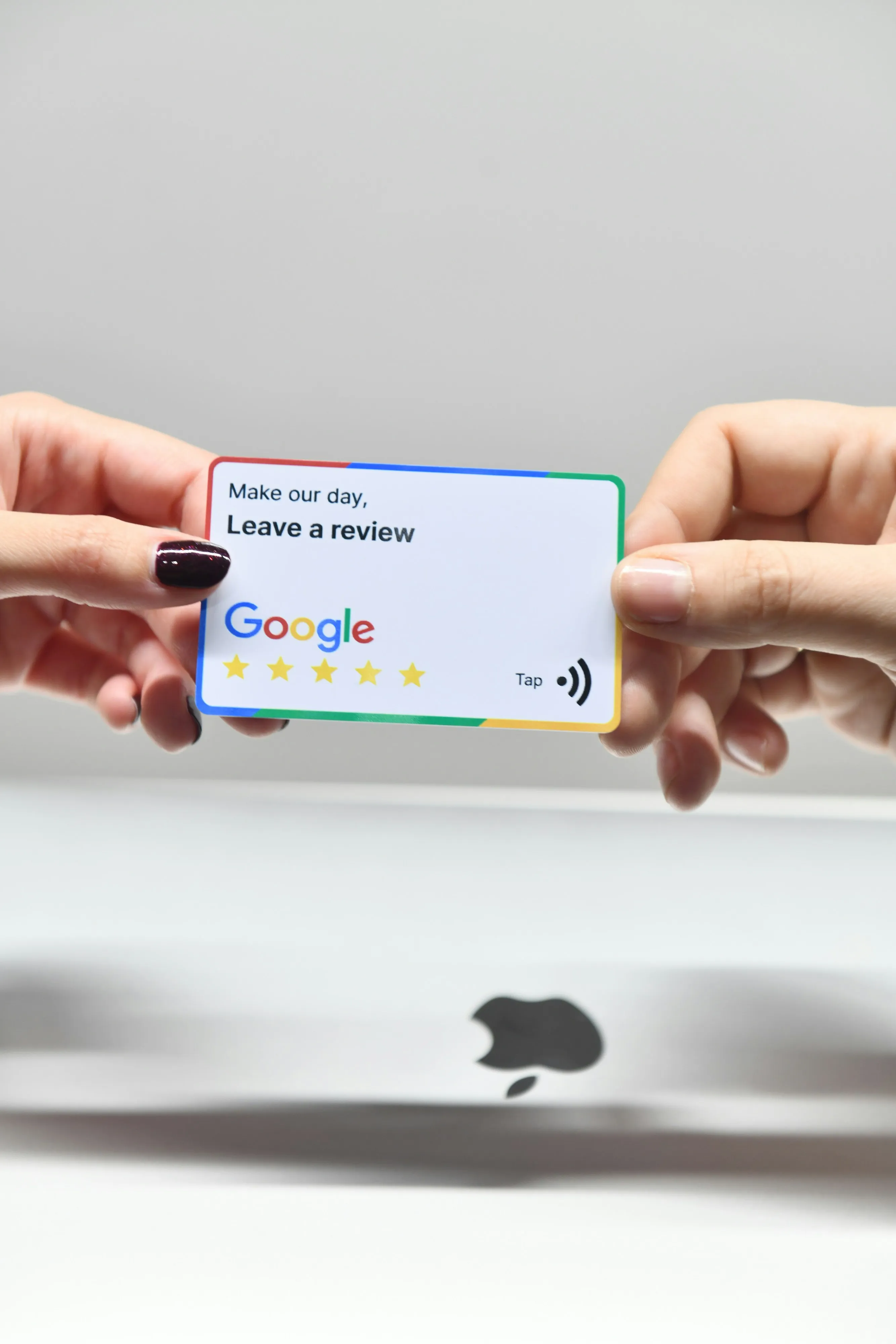
Good to know - Google doesn’t remove a review just because it’s negative or unfair: only a violation of its policies (fake content, conflict of interest, harassment, off-topic content…) justifies removal. Facing a suspicious review, the right method combines factual verification, a measured public response, and a well-argued report, never a direct accusation or coordinated pressure.
A negative review isn’t automatically a fake review
An unhappy customer, a misunderstanding about a service, an experience that didn’t meet expectations: these are legitimate negative reviews, and Google will never remove them on request. Some reviews, however, don’t match any real visit: wrong business entirely, geographic confusion, a review copy-pasted from a competitor, or even a deliberate attempt to cause harm.
The distinction matters. Trying to get a legitimate negative review removed out of simple discomfort risks a rejected report, and sometimes a public response that backfires. The process below only applies to reviews you can reasonably doubt correspond to a real experience.
Step 1: try to identify the customer
Before responding, cross-check what you have: the name used on Google, the supposed visit date, a matching reservation, a receipt, an order, a phone or email exchange, a complaint you already received, the name of a staff member mentioned in the review.
Stay cautious: the absence of a name in your bookings proves nothing on its own. The person may have booked under a different name, come with someone else, walked in without a reservation, or simply used a pseudonym on their Google profile. That uncertainty should show in the tone of your public response.
Step 2: spot factual inconsistencies
A suspicious review often contains details that don’t match your business: a dish that isn’t on the menu, a service you don’t offer, hours incompatible with a visit on the stated date, a staff member who never worked there, a location that doesn’t match.
Keep every inconsistency you find: it will be your strongest argument if you need to report the review or appeal a decision.
Step 3: check the author’s public profile
The reviewer’s Google profile is public: look at their other contributions. Several signals can reinforce the suspicious nature of a review, without ever proving it on their own:
- several 1-star reviews posted within a very short time
- identical or near-identical wording across multiple businesses
- reviews targeting several direct competitors in the same sector
- geographic activity that’s hard to reconcile
- a profile that seems to exist only to post a handful of negative reviews
These elements help document a case, not establish certainty.
Step 4: respond publicly, but never accuse
This is the trickiest step. Even when a review looks clearly fake, never write publicly “this review is fake” or “you never came to our business”: without proof, that’s a liability risk for you, and a bad signal to future visitors reading your profile.
Prefer a factual response that asks for clarification:
Hello, we’ve checked our bookings and the information we have, but we’re unable to identify your visit. Could you let us know the date of your visit and, if possible, the name used for your booking or any additional details? We’d like to understand what happened so we can respond accurately. Thank you.
This response does three useful things: it shows future customers you take reviews seriously, it gives a genuine customer a chance to provide information, and it may surface further inconsistencies if the author replies.
Step 5: gather evidence before reporting
Before reporting the review, take screenshots of the full review, the account name, the rating, the date, any attached photos, the author’s public profile, and suspicious reviews posted on other businesses. Also keep relevant internal records: booking history, menu, opening hours, staff schedule.
Step 6: report the review to Google, with the right reason
From your Google Business Profile: open reviews, click the three dots next to the review in question, then “Report review” and choose the reason that genuinely matches the situation. The most relevant categories are usually spam, fake engagement, conflict of interest (a competitor’s review, a former employee), offensive content, harassment, or off-topic content (wrong business).
Don’t file multiple reports with approximate reasons: a poorly chosen category weakens your case and slows down the review.
Step 7: wait, then appeal if needed
Google usually takes a few days to process a report. Nothing requires the author to respond to your request for clarification within any given timeframe: their silence doesn’t automatically trigger a removal, but it can strengthen a case that already contains several inconsistencies.
If Google decides the review complies with its policies, you can appeal from the review management tool in your Google Business Profile. This appeal is one-time only: prepare it carefully, with precise facts rather than emotional arguments.
Weak argument: “This customer is lying and this review is costing us business.”
Stronger argument: “We’re unable to find any record matching this visit. We publicly asked the author to clarify the date and circumstances of their visit and received no further information. Several details in the review are also inconsistent with our business: [specific inconsistencies].”
What you should never do
Some reactions, however understandable in the moment, make things worse and can carry heavier consequences than the review itself:
- buying fake positive reviews to compensate
- organizing coordinated fake reports
- threatening the author or disclosing their personal data
- publishing information from a booking or a payment
- publicly accusing someone of being a competitor without proof
- responding in anger
- creating fake accounts to respond on the business’s behalf
- automatically treating every negative review as fraudulent
What if the customer turns out to be real?
If the exchange eventually identifies a genuine visit, change your approach immediately: acknowledge the issue, verify the facts, offer a private conversation, provide a solution when possible, and respond publicly without escalating. A Google profile made up only of 5-star reviews can sometimes look less credible than one with a negative review handled well.
Online reputation isn’t just about one review
A well-handled suspicious review protects a single case. A consistent local SEO strategy (a complete Google Business Profile, consistent NAP citations, reviews genuinely solicited from real customers, content that builds trust) reduces how much weight any single review, real or fake, can carry against your visibility. It’s one of the pillars we cover in our SEO approach.
A fragile Google profile, or a suspicious review that’s been sitting there for months? Let’s talk about your situation. A quick diagnostic often reveals what’s really weighing on your online reputation.